

The forex market is open 24 hours a day, five days a week. It opens Sunday evening and closes Friday evening, New York time. Four regional sessions hand off around the clock: Sydney, Tokyo, London and New York. The most active, tightest-spread window is the London/New York overlap. When you trade matters, because liquidity changes spreads, volatility and how cleanly price moves.
Is forex really 24 hours
Yes, on weekdays. There is no single central exchange, so trading passes between financial centres around the globe. Somewhere is always open from the Sunday evening open to the Friday evening close, New York time.
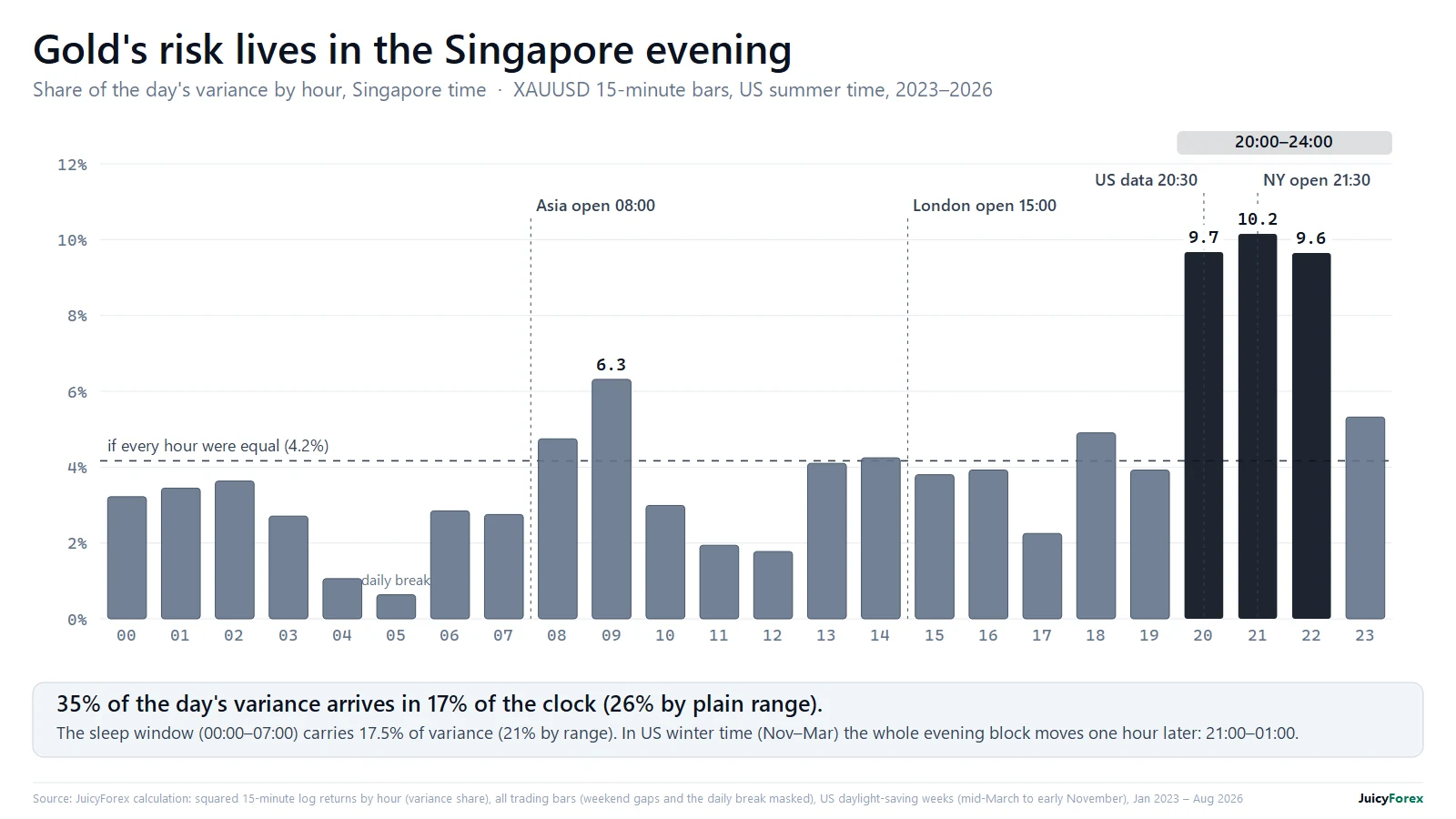
But always open is not always worth trading. Liquidity, and therefore spreads and how smoothly price moves, varies enormously across the day. The clock is a tool, not a licence to trade at any hour.
The four trading sessions
The day is conventionally split into four sessions, named for their financial centres.
- Sydney. The week's opener. Quiet, with thinner liquidity.
- Tokyo (Asian). Active in JPY and AUD pairs.
- London (European). The largest session by volume. Deep liquidity and tight spreads.
- New York (US). High activity, especially around US data releases.
Each currency tends to be most active during its home session. The pair you trade should influence when you trade it.
Session overlaps
The busiest, most liquid windows are where two sessions are open at once. The big one is the London/New York overlap, the hours when both Europe and the US are trading. Volume peaks, spreads are tightest, and the majors move with the most conviction.
There is a smaller Tokyo/London overlap as Asia hands off to Europe. If you can only trade part of the day, the overlaps are usually the highest-quality hours.
The best time to trade
For most beginners trading the majors, the London session and the London/New York overlap offer the best mix of liquidity and clean movement. Tight spreads lower your cost. Genuine volume means moves are less likely to be random noise.
The quiet hours, from late US afternoon into the Sydney open, often chop sideways on wider spreads. That is a difficult, low-reward environment to learn in. You do not have to trade every hour. Trade the good ones.
Weekend gaps and news
The market closes Friday evening and reopens Sunday evening. Events over the weekend can cause price to gap, opening at a different level than it closed. A gap can jump straight past a stop-loss. This is a specific risk of holding positions over the weekend.
Scheduled news matters too. Around high-impact releases, spreads widen and price can move violently. Know when major data is due for the pairs you trade, and decide your plan before the release, not during it.
A note on time zones
Session times shift with daylight saving and are usually published in a single reference zone. Rather than memorise clock times, learn the sequence: Sydney, Tokyo, London, New York. Check the current local times for your own zone against a session clock. Match the pair to its session, favour the overlaps, and let the quiet hours pass.
Questions
What is the best time to trade forex?
For the majors, the London session and the London/New York overlap offer the deepest liquidity, tightest spreads and cleanest moves.
What is a weekend gap in forex?
Events while the market is closed can make price open Sunday at a different level than it closed Friday. The gap can skip past a stop-loss.
70–80% of retail investor accounts lose money trading CFDs. This page is education, not advice. All trade examples are constructed composites.