
Macro is the study of the big forces that set the tone of every market: central banks, interest rates and bond yields, the economic calendar, inflation and liquidity. Central banks move the price of money, and that flows into yields, currencies and gold. Markets react to the surprise versus expectations, not the level.
Central banks and yields
Central banks are the most important actors in macro. By setting interest rates and signalling their path, they move currencies, bonds and gold. The US Federal Reserve matters most because the dollar is the world's reserve currency. Currencies move on relative policy, so read central banks and how they move markets.
Their decisions flow into bond yields, which set the opportunity cost of holding assets that pay no income. That is why yields anchor gold. The shape of the yield curve also carries a message about growth and recession risk. See bond yields.
The calendar and inflation
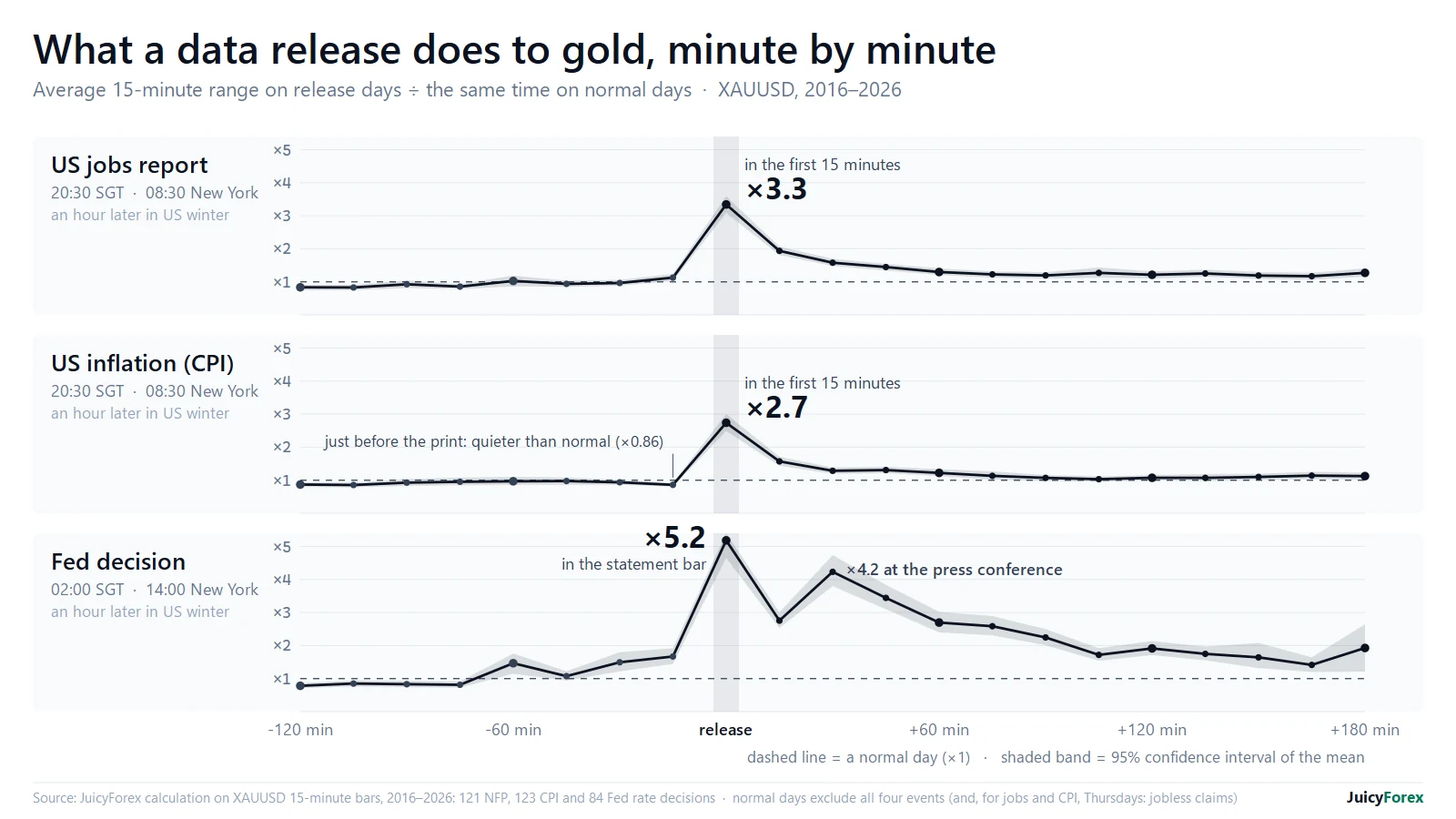
A handful of scheduled releases move markets more than all the rest combined: inflation (CPI), the jobs report (NFP), central-bank meetings and GDP. Our economic calendar guide shows which data matters and how to read a release without getting caught in the whipsaw.
Inflation is the variable central banks are built to control. It drives policy, policy drives real yields, and real yields drive gold and the dollar. The link is subtle, and a hot print is not automatically bullish for gold. See inflation and markets.
Liquidity: QE and QT
Central banks also move the quantity of money in the system. Quantitative easing (QE) adds liquidity and tends to support risk assets and gold. Quantitative tightening (QT) drains it and tends to be a headwind.
Liquidity is a slower, structural force. It is the backdrop against which individual data prints play out. See QE, QT and liquidity.
Geopolitics
Wars, sanctions, shipping-lane tensions and elections move markets through two channels: an oil risk premium, and safe-haven flows into gold, the dollar, the yen and the franc. Both are often event-driven and can fade if no real disruption follows. Markets price credible risk, not rhetoric.
Start with geopolitics and markets, then go deeper on the oil risk premium, safe-haven flows and de-dollarisation and gold. We cover it strictly as a market driver, with no predictions.
Fed leadership
Who leads the Fed shapes the drivers behind every market. Jerome Powell led it through the pandemic and the inflation war. Kevin Warsh is among the most-discussed candidates to succeed him, characterised as more hawkish and rules-based.
See how their philosophies differ, how a leadership change could affect gold, and why Fed independence matters. All of it is framed as scenarios, never predictions.
Markets trade the surprise
A rate hike that was fully expected can barely move price. A data point far from consensus can move it violently. Compare the outcome to what was priced in, not to the previous number.
Macro is context, not a signal. It tells you which way the wind is blowing and why the market moved. It does not tell you the next candle, and it is not a reason to size up a trade. Scheduled events are also where volatility is highest. Use macro to read the board with clear eyes, and set your risk with your stop and size. This is education, not advice.
70–80% of retail investor accounts lose money trading CFDs. This page is education, not advice. All trade examples are constructed composites.