

CPI, the Consumer Price Index, is the headline inflation report, and CPI day is one of the biggest scheduled volatility events for gold. The move is driven by the surprise versus expectations, not the level. A hotter-than-expected print usually points to a more hawkish Fed and pressures gold. A cooler print usually supports it. A hot print is not automatically bullish.
What CPI is: headline and core
CPI measures the change in prices consumers pay for a basket of goods and services. It is released monthly and is the most market-moving inflation report.
You will see two versions. Headline CPI includes everything, including volatile food and energy. Core CPI strips those out to show the underlying trend. Markets and the Fed weight core heavily because it is less noisy. Watch both, but pay special attention to core.
The surprise drives the move
Gold does not react to the CPI level. It reacts to how the number came in against the consensus forecast.
A hotter print suggests stickier inflation, which points to a more hawkish Fed, higher real yields and a firmer dollar. That is a headwind for gold. A cooler print points the other way and tends to support gold. The move happens in seconds, so the beat or miss matters, not the headline figure on its own.
Why a hot CPI is not automatically bullish
If gold is an inflation hedge, a hot print should lift it. Often it does the opposite. The reason is the chain in real yields: hot inflation makes the market expect the Fed to keep rates higher. If expected rates rise faster than inflation, real yields rise and gold falls.
So a hot CPI can be bearish for gold because of what it implies for policy. Watch the reaction in yields and the dollar to see which force won.
How to read a release
- Compare core CPI to the consensus first.
- Note the headline, but weight core.
- Ask whether the print makes the Fed more or less hawkish.
- Confirm with the reaction in real yields and the dollar.
Also watch PCE, a different inflation gauge that the Fed actually targets. It can tell a slightly different story and matters for the medium-term path.
The data: an hour, not a day
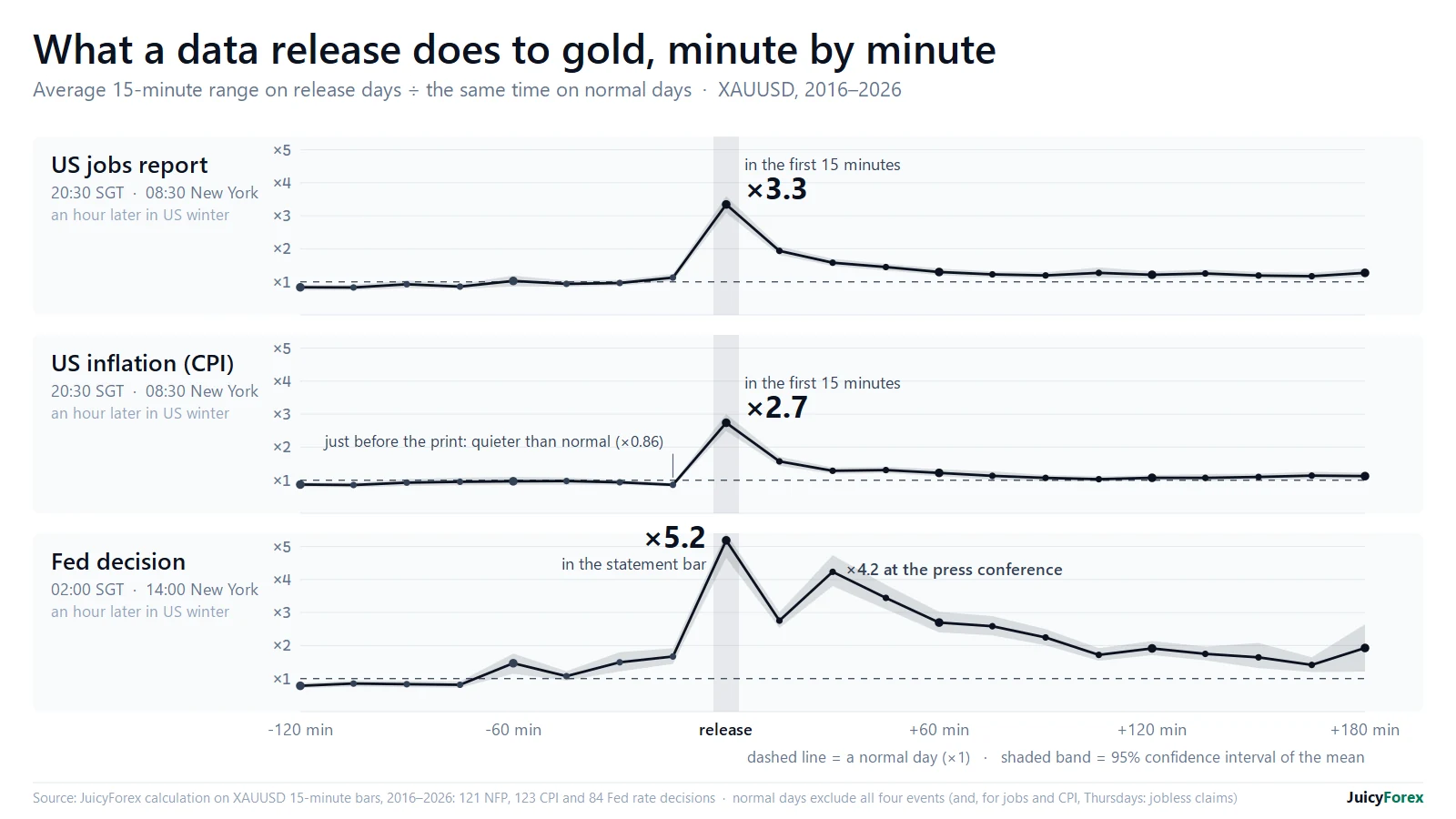
We measured gold's range around CPI releases from 2016 to 2026. The first 15 minutes after the print run about 2.7 times a normal 15 minutes, and the whole hour about 1.9 times. By 90 minutes it is back to about 1.1 times normal. The CPI session as a whole is only about 1.2 times normal.
The whipsaw is real, but it lives in a one-hour window. See the full data.
The whipsaw warning
Gold often spikes hard on the first read of the number, then reverses within minutes as the market digests the details. Chasing that first candle is how many traders get caught. Treat CPI day as you would the Fed: expect two-way moves, size smaller and use structural stops. See trading gold around news.
Questions
Why does a hot CPI sometimes make gold fall?
Hot inflation makes the market expect the Fed to keep rates higher. If expected rates rise faster than inflation, real yields rise and gold tends to fall.
Does gold react to the CPI number or the forecast?
To the surprise: how the number came in versus consensus. A beat or miss drives the move, not the level.
Should I trade gold on CPI day?
This is education, not advice. Releases are volatile and often whipsaw. If you trade them, expect sharp two-way moves and use smaller size and wider structural stops.
70–80% of retail investor accounts lose money trading CFDs. This page is education, not advice. All trade examples are constructed composites.