

Gold follows the same 24/5 clock as forex, but its best hours are the London session, the London/New York overlap and the window around US data releases. That is when liquidity is deepest, spreads are tightest and moves are cleanest. The Asian session is generally quieter and more range-bound.
Is gold traded 24 hours?
Spot gold trades essentially around the clock on weekdays. It follows the same global handover as the forex sessions: Sydney, Tokyo, London and New York.
A live price is not the same as a tradeable one. Gold's activity is concentrated in a few hours. The rest can be thin, spread-widened chop that is a poor place to learn.
When gold actually moves
Gold wakes up with London and is most active during the London/New York overlap. Both major centres are trading and US economic data lands. The deepest liquidity and the cleanest trends of the day usually appear here.
The US morning, around the release of key data, is gold's prime time. If you can only trade part of the day, this window offers the best mix of movement and tight spreads.
The Singapore clock, measured
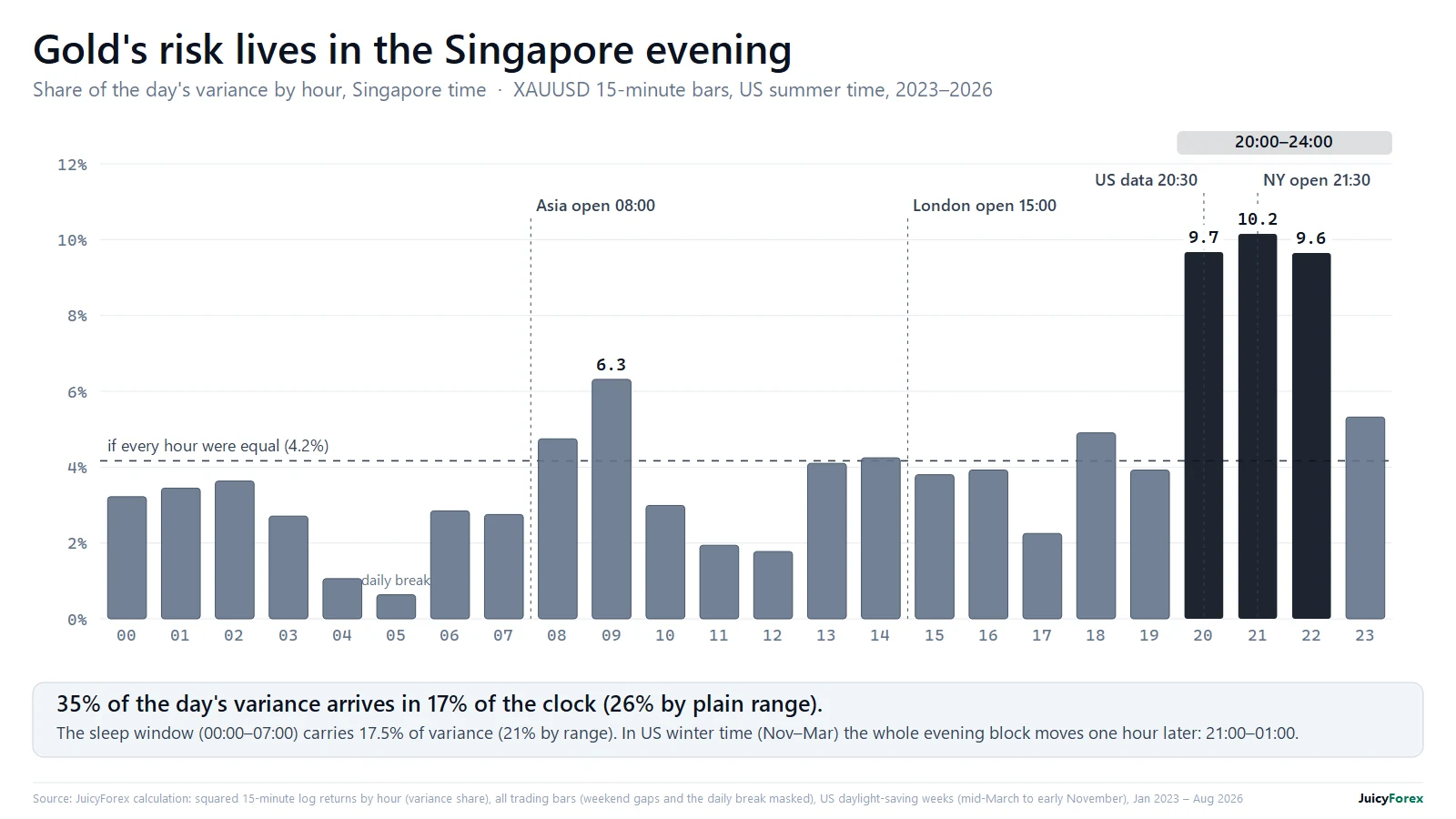
We measured it across XAUUSD 15-minute bars since 2023. In US summer time, 20:00–24:00 Singapore time carries about 35% of gold's variance, the squared-move measure of risk, in 17% of the clock. By plain range the share is 26%.
- The three busiest hours are 20:00, 21:00 and 22:00, around US data at 20:30 and the New York open at 21:30.
- A smaller peak sits at 09:00, just after the Asian open at 08:00.
- The quietest stretch is 00:00–07:00, which carries 17.5% of the variance.
In US winter time the whole evening block moves one hour later.
The Asian session
In the Asian session gold is typically calmer and more range-bound, with thinner liquidity and wider spreads than the London and New York hours. It can drift, consolidate or hold a range set earlier. That suits patient range work and frustrates trend traders.
Quieter does not mean safe. With fewer participants to absorb it, an occasional headline can move price further than usual. Respect the lower liquidity rather than assuming calm.
Spreads and liquidity by time
Gold's spread is tightest when liquidity is deepest, in the London and New York hours. It is widest in the quiet gaps, such as the late US afternoon before Asia gets going. Spread is a direct cost, so trading gold in its liquid hours is simply cheaper.
Matching style to session
- Scalpers and intraday traders: concentrate on the London and New York hours, where spreads are tight and movement is real.
- Range traders: may find setups in the quieter Asian session.
- Swing traders: care less about the hour of entry and more about daily structure.
We compare these styles in the scalping vs swing guide. A workable habit for most traders: prepare before the London open, focus on the overlap and the US-data window, and be done before the thin late hours. Keep the same risk discipline throughout. Gold's volatility does not take a break because the session is quiet.
Questions
What are the best hours to trade gold?
The London session, the London/New York overlap and the window around US data releases. Liquidity is deepest, spreads are tightest and moves are cleanest.
Is the Asian session good for trading gold?
It is generally quieter and more range-bound, with thinner liquidity and wider spreads. That can suit patient range trading, but headlines can move price more than usual.
When is gold's spread tightest?
During the London and New York sessions, when liquidity is deepest. It widens in the quiet hours, so the liquid hours are cheaper to trade.
70–80% of retail investor accounts lose money trading CFDs. This page is education, not advice. All trade examples are constructed composites.