

Scalping gold means many short trades for small moves. It is highly sensitive to spread and demands the liquid hours and constant attention. Swing trading holds gold for days on its macro drivers, needs wider stops and smaller size, and takes far less screen time. Neither is better. Both must respect that gold is more volatile than the majors.
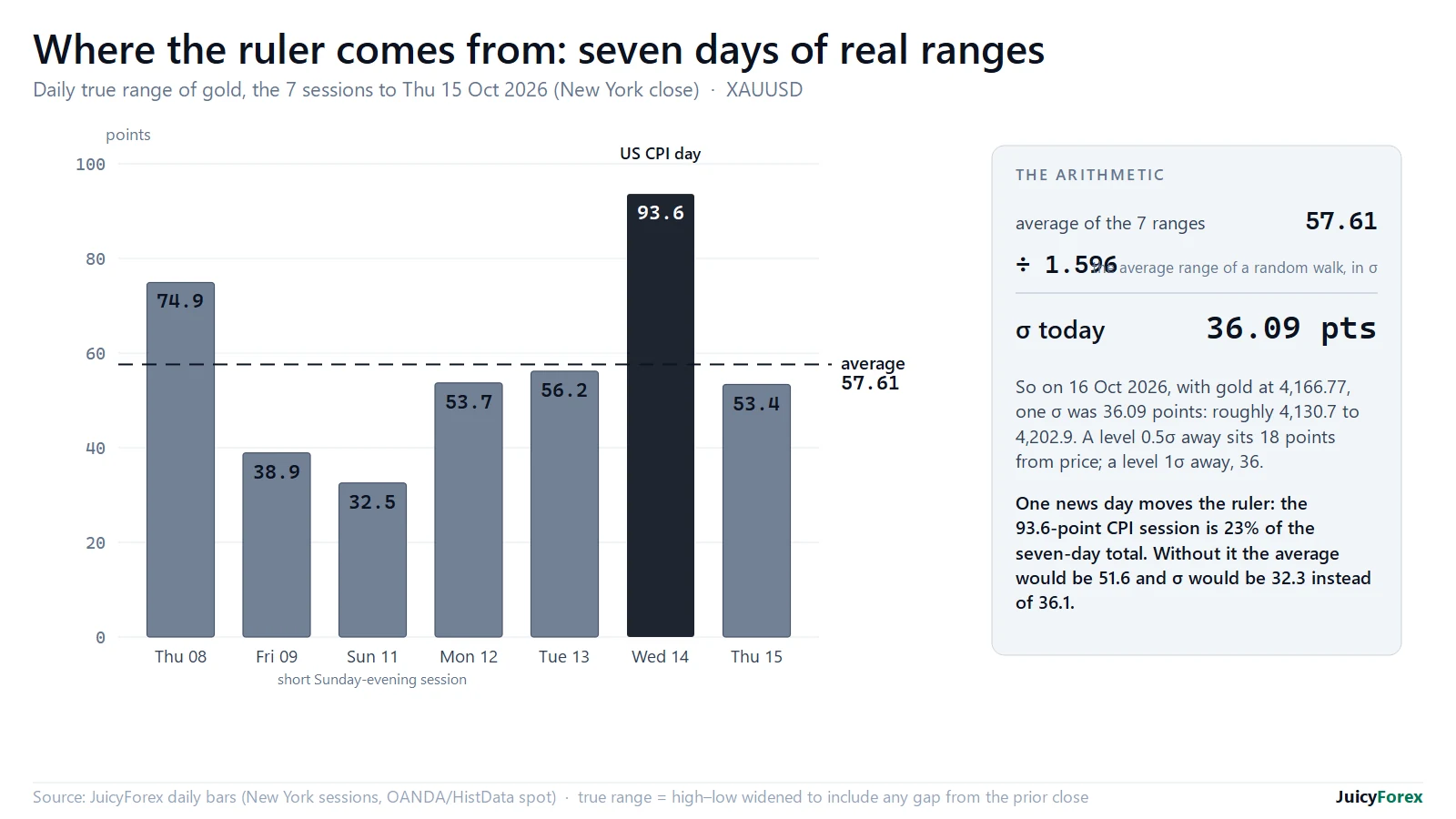
Gold's volatility shapes everything
The fact that governs how you trade XAUUSD is that it moves more than the major currency pairs. Larger ranges change the maths of every style. Stops must be wider to survive normal noise, and wider stops mean smaller positions for the same 1% risk.
A gold position sized like a EUR/USD trade is quietly several times riskier. Size for gold's range, not for the pip distance you are used to.
Scalping gold
Scalping takes many small trades for quick moves. On gold this is demanding. Because you target small distances, the spread is a large share of each trade, so it only works in the tight-spread London and New York hours. Gold's habit of spiking without warning can turn a scalp into an outsized loss in seconds.
Scalping also demands intense focus and fast execution, and the costs add up across dozens of trades. Most beginners underestimate how much gold's volatility punishes tight stops.
Swing trading gold
Swing trading holds gold for days to weeks. It trades the macro drivers and higher-timeframe structure. Stops sit beyond meaningful levels and targets are larger, so a single spread barely matters and screen time is minimal.
The trade-off is exposure to overnight and weekend gap risk, and the patience to sit through noise. For many part-time traders, swing trading fits gold's character better than fighting its intraday chop.
Position sizing for gold
Whatever the style, size from the stop. Let gold's volatility widen the stop, and so shrink the position. The Average True Range helps here: sizing stops to a multiple of gold's ATR keeps risk consistent as volatility changes.
Keep the same 1% risk cap you use everywhere. The common mistake is carrying a currency-pair lot size over to gold. The correct lot is almost always smaller, because the stop is almost always wider.
Which suits beginners
For most beginners, swing or higher-timeframe trading suits gold better than scalping. Slower trading forgives imperfect execution, keeps you away from the spread-and-spike environment where scalpers get hurt, and gives you time to think. Scalping gold is an expert-level pursuit dressed up as a beginner one.
Start slow, on a demo or micro lots. Prove you can follow a plan across gold's swings before you speed up.
Style is not a system
Neither style works alone. Both work best with market structure: trade at levels, in the direction of the higher-timeframe trend, with an edge you have measured. Style decides the timeframe. Structure and risk decide the trade.
Questions
Why do I need smaller positions on gold?
Gold is more volatile than the major pairs, so stops must be wider. For the same 1% risk, a wider stop means a smaller position.
Does swing trading gold carry extra risk?
Yes. Holding for days exposes you to overnight and weekend gap risk. The trade-off is larger targets and less exposure to intraday spread and spikes.
Is scalping gold good for beginners?
Generally no. It is highly sensitive to spread, needs fast execution in the liquid hours, and gold's sudden spikes can turn a tight-stop scalp into an outsized loss.
70–80% of retail investor accounts lose money trading CFDs. This page is education, not advice. All trade examples are constructed composites.