

Forex pairs trade on interest-rate differences and relative economic strength between two currencies. Gold (XAUUSD) is a commodity and safe haven driven by real yields, the dollar and risk sentiment. Gold is typically more volatile, so it needs wider stops and smaller size. Neither is better. The same risk discipline applies to both.
Same platform, different animal
On your broker, gold sits next to EUR/USD and trades the same way: buy, sell, leverage, stop, target. That familiarity hides a real difference. Forex pairs are bets on two economies and their central banks. Gold is a commodity and store of value with its own drivers.
Trading gold as if it were just another pair is the mistake behind many blown accounts. The mechanics are shared. The behaviour is not. Prefer forex if you want setups tied to scheduled economic data.
Different drivers
Major currency pairs move on interest-rate differentials, growth and relative monetary policy. Gold moves on real interest rates, the US dollar, inflation expectations and safe-haven demand.
In a crisis, currencies react to their own economies. Gold often catches a flight-to-safety bid that has nothing to do with any single country. So gold can trend hard on a macro theme for weeks, and it can spike on geopolitical news that barely moves the majors.
Volatility and cost
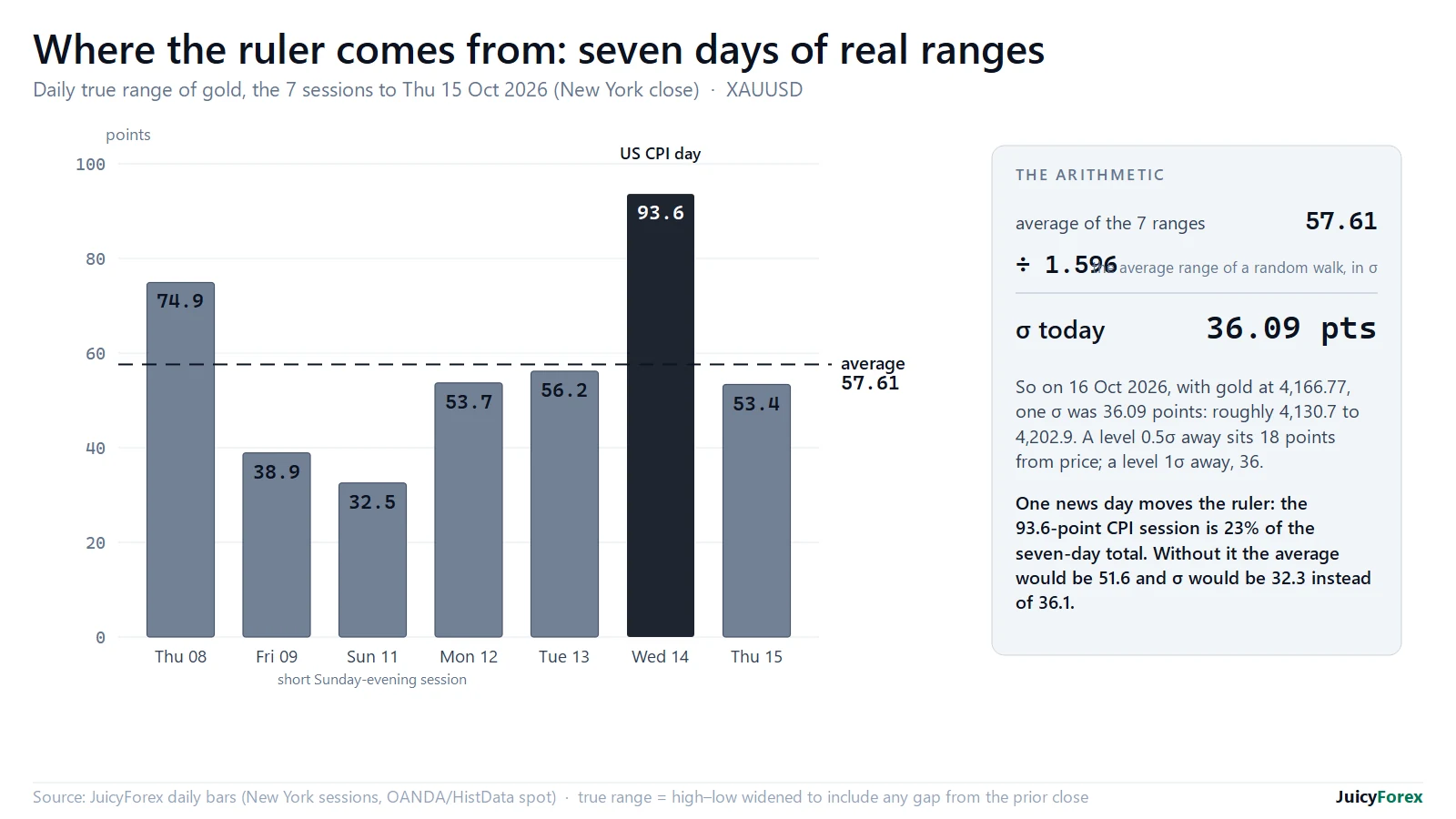
The practical headline is volatility. Gold's daily range is usually larger than the major pairs'. The same dollar risk therefore needs a smaller position and a wider stop. Its spread is also generally wider than the tightest majors, and it widens more around news.
None of this makes gold worse. It makes it different. Sized for its range, gold is perfectly tradeable. Sized like EUR/USD, it is dangerous.
Which suits you?
- Prefer forex if you want tighter spreads, lower volatility to learn on, and setups tied to scheduled economic data.
- Prefer gold if you like strong macro trends and can stomach bigger swings.
Beginners often find the majors a calmer classroom before adding gold. There is no universal answer. It depends on your temperament, your available hours and how you handle volatility. Try both on demo and notice which you actually trade well.
Trading both sensibly
Plenty of traders trade gold and forex side by side. Size each to its own volatility, and watch correlation. A weaker dollar tends to lift gold and many pairs at once, so several separate trades can really be one big bet on the dollar.
Apply one risk framework across both, with the same 1% cap and the same journal. Let each instrument's volatility set the position size. Then gold and forex become two tools, not two temptations.
Questions
Is gold more volatile than forex?
Generally yes. Gold's daily range is typically larger than the major pairs'. The same dollar risk needs a smaller position and a wider stop, and its spread is usually wider too.
Should a beginner trade gold or forex?
Many beginners find the major pairs a calmer place to learn, with tighter spreads and lower volatility. Add gold later, once you respect its larger swings.
Do gold and forex use the same risk management?
The framework is the same: a consistent risk cap such as 1% per trade, with size set from the stop. Gold's higher volatility means wider stops and therefore smaller positions.
70–80% of retail investor accounts lose money trading CFDs. This page is education, not advice. All trade examples are constructed composites.