

Trading rewards patience and consistency far more than intensity. Patience means waiting for your setup rather than forcing trades, and letting an edge play out over a large sample instead of judging it trade by trade. Consistency means applying the same process every time. Doing ordinary things reliably for a long time beats chasing extraordinary results quickly.
Patience in your entries
The first form of patience is waiting for your setup. Markets offer countless chances to do something, but only a fraction fit your plan. Patience is the willingness to sit and wait, sometimes for a long time, until a genuine, high-quality setup appears. You pass on everything else.
This is the direct antidote to FOMO and overtrading. The patient trader is comfortable doing nothing, because forcing a trade has no edge.
Patience with your edge
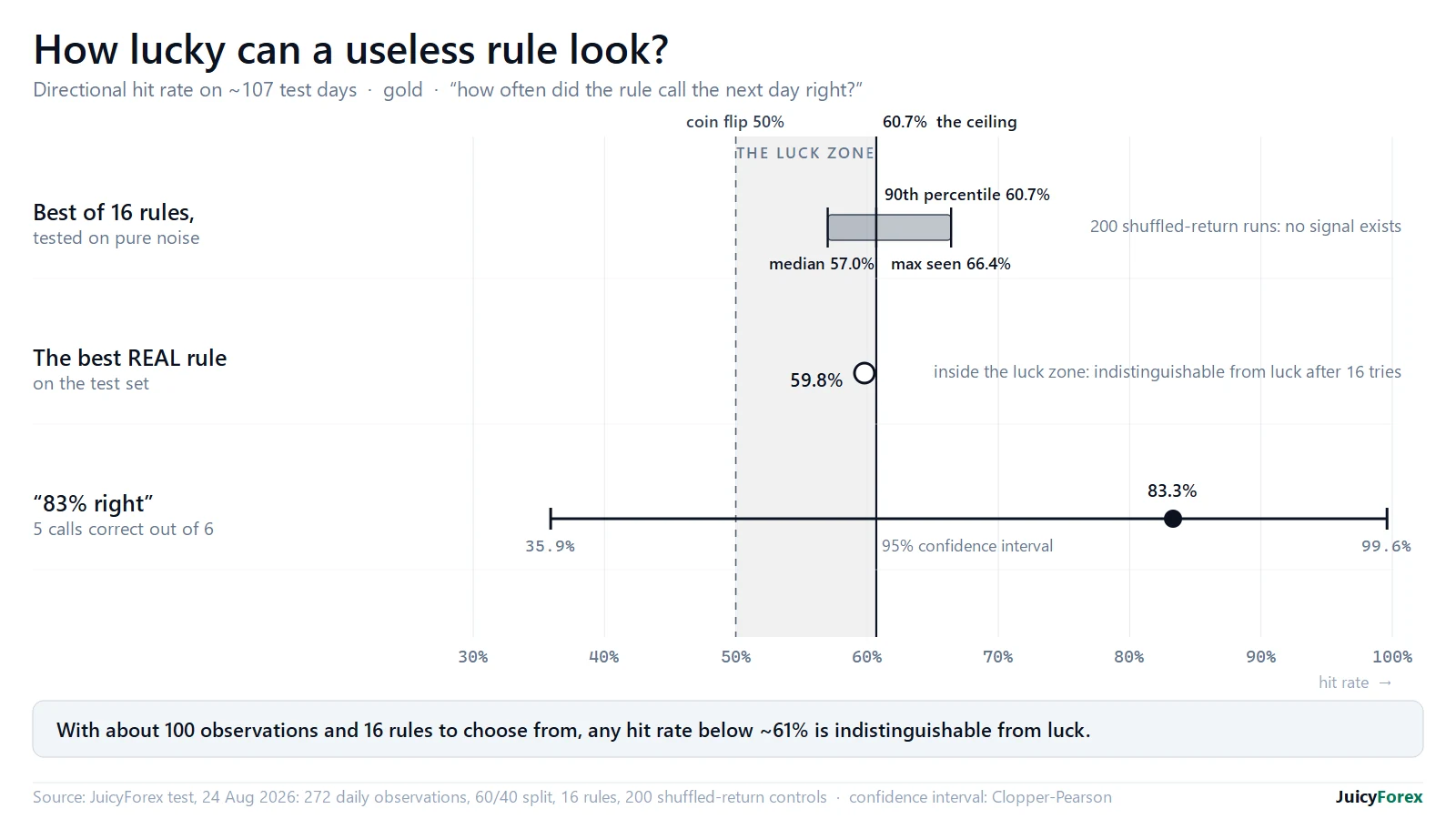
The deeper form of patience is trusting your edge to play out over a large sample. An edge is an average across many trades, not a promise on any one. Over ten or twenty trades, luck dominates and results tell you little. Only over a large sample does a real edge reveal itself.
Impatience here is costly. Traders abandon a working method during a normal losing streak, or jump between strategies chasing recent winners. Give your method enough trades to show what it is, and do not quit at the worst moment.
Consistency of process
Consistency is applying the same process every time. That means the same rules, the same position sizing and the same risk cap, whatever happened on the last trade or however you feel. It makes your results meaningful, because you cannot judge or improve a method you apply erratically.
Consistency also compounds. Small, repeatable good decisions, made reliably over hundreds of trades, add up to far more than occasional brilliant ones surrounded by chaos.
Trading is a long game
Much of trading psychology comes down to accepting this. There is no shortcut, no single trade that makes you, and no strategy that pays off overnight. The traders who last show up, apply a sound process, manage risk, and let time and probability do the work.
Intensity feels productive. Trading hard, watching every tick and forcing action usually is not. Patience and consistency feel slow, but they are what compound.
Building the habit
These are habits, built the same way as discipline.
- A clear plan you can apply the same way every time.
- Position sizes small enough to stay calm.
- A journal that tracks your process over a long horizon, so you can see it compound.
Do ordinary things consistently for long enough, and the results take care of themselves. They are habits, not personality traits. This is education, not advice.
Questions
Why can't I judge my strategy over a few trades?
An edge is an average across many trades, not a promise on any one. Over ten or twenty trades, luck dominates and results tell you little.
Is trading a get-rich-quick activity?
No. It is a long game with no shortcut. The traders who last apply a sound process consistently, manage risk, and let time and probability do the work.
What does consistency mean in trading?
Applying the same process every time, with the same rules, position sizing and risk cap, regardless of the last result or how you feel. It makes your results meaningful.
70–80% of retail investor accounts lose money trading CFDs. This page is education, not advice. All trade examples are constructed composites.