

Central banks set interest rates and signal their future path. That moves the price of money, and with it currencies, bonds and gold. The US Federal Reserve matters most because the dollar is the world's reserve currency. Currencies move on relative policy, and markets react to the surprise versus what was already expected.
What central banks do
A central bank manages a currency and, in most cases, targets stable inflation, often around 2%. Its main lever is the policy interest rate, the price of short-term money. Raise rates and you tighten conditions to fight inflation. Cut them and you ease to support growth.
Beyond the rate itself, central banks use forward guidance. This means signalling the future path, which often moves markets more than the decision does. They also use balance-sheet tools such as QE and QT.
The main central banks
The Federal Reserve (US dollar) is the most important. The dollar is the global reserve currency, and US Treasuries are the world's benchmark. The ECB (euro), Bank of Japan (yen), Bank of England (pound) and others each drive their own currency.
Two deserve special mention:
- Bank of Japan. It matters far beyond the yen, because Japan is the home of the global carry trade. When it shifts, risk can wobble worldwide.
- People's Bank of China. It is a major official buyer of gold, a slow structural support for the price.
Why currencies move on relative policy
This idea trips up beginners. A currency does not strengthen just because its central bank raises rates. It strengthens if that bank is more hawkish than the one it is paired against. FX is always relative.
The dollar's broad direction is the net of the Fed versus everyone else. When the Fed is uniquely hawkish, the dollar tends to rise against nearly everything. That is a headwind for gold. When the gap narrows, the move fades.
Markets trade the surprise
As with all macro, the market reacts to the surprise, not the level. A rate decision that was fully expected can barely move price. The reaction comes from the outcome versus what was priced in. A hike can even see a currency fall if the guidance is softer than feared.
We cover this in depth for gold in how the Fed moves gold.
What to watch
At each meeting, watch these four things:
- The decision versus expectations.
- The statement wording.
- Any projections, such as the Fed's "dot plot".
- The press conference tone, which often matters most.
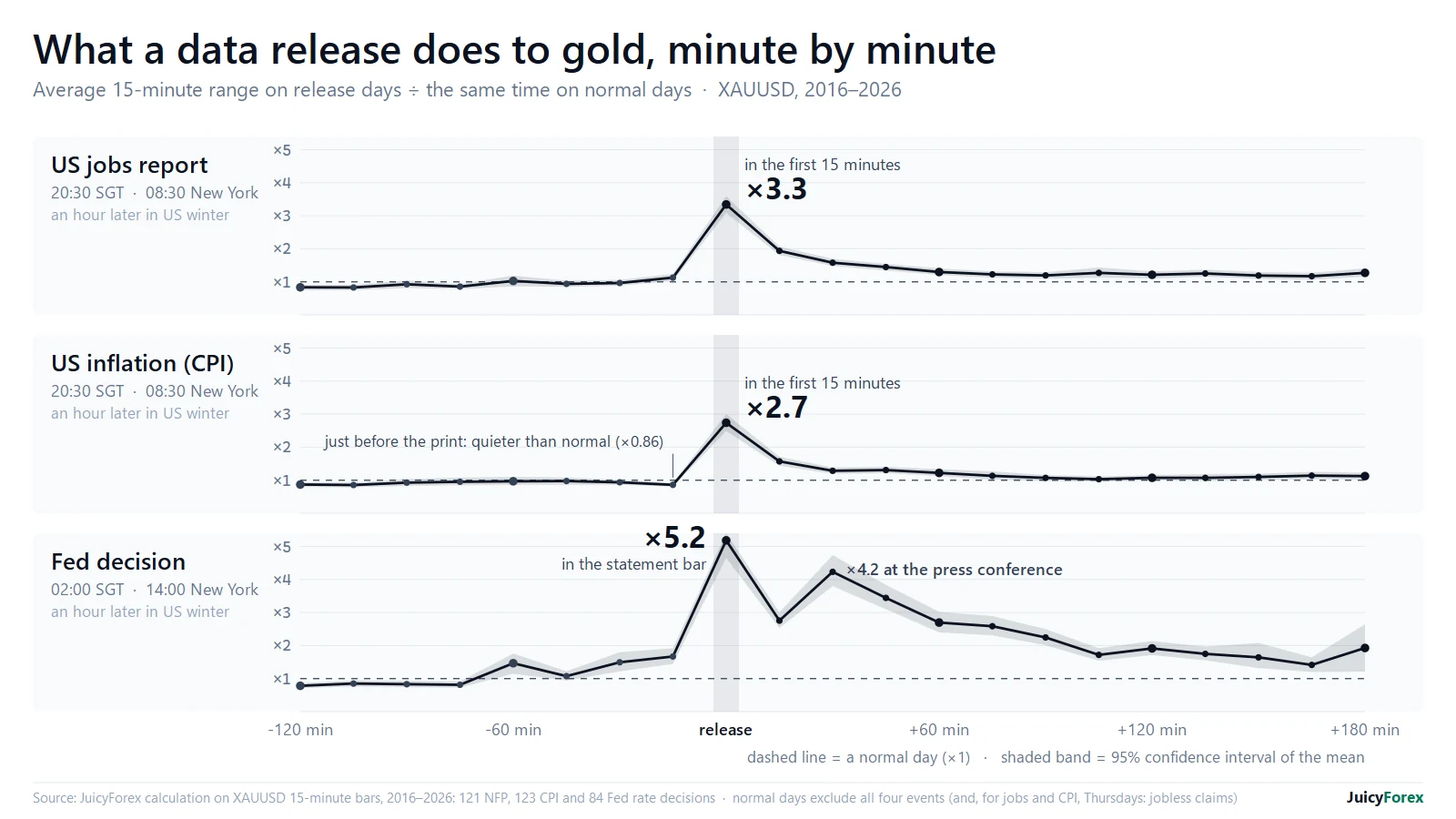
Then read the reaction in yields and the currency to confirm your interpretation. Central-bank days are among the most volatile of the year. Understanding them is about reading the tone, not predicting the move. This is education, not advice.
Questions
Which central bank matters most?
The US Federal Reserve, because the dollar is the world's reserve currency and US Treasuries are the global benchmark. Other banks drive their own currencies.
Why doesn't a currency always rise when its central bank hikes rates?
Currencies move on relative policy. A currency strengthens only if its bank is more hawkish than the one it is paired against, and more hawkish than the market already expected.
Why are central bank days so volatile?
The decision and guidance can reprice interest-rate expectations sharply and instantly. Markets trade the surprise, and the reaction can whipsaw, especially around the press conference.
70–80% of retail investor accounts lose money trading CFDs. This page is education, not advice. All trade examples are constructed composites.