

Geopolitics moves markets mainly through two channels: an oil risk premium (fear of supply disruption lifts crude) and safe-haven flows (fear pushes money into gold, the dollar, the yen and the franc). Both are usually event-driven and can fade if no physical disruption follows — markets price credible risk, not rhetoric. Understanding the channels helps you read a move without over-trading every headline.
The two channels
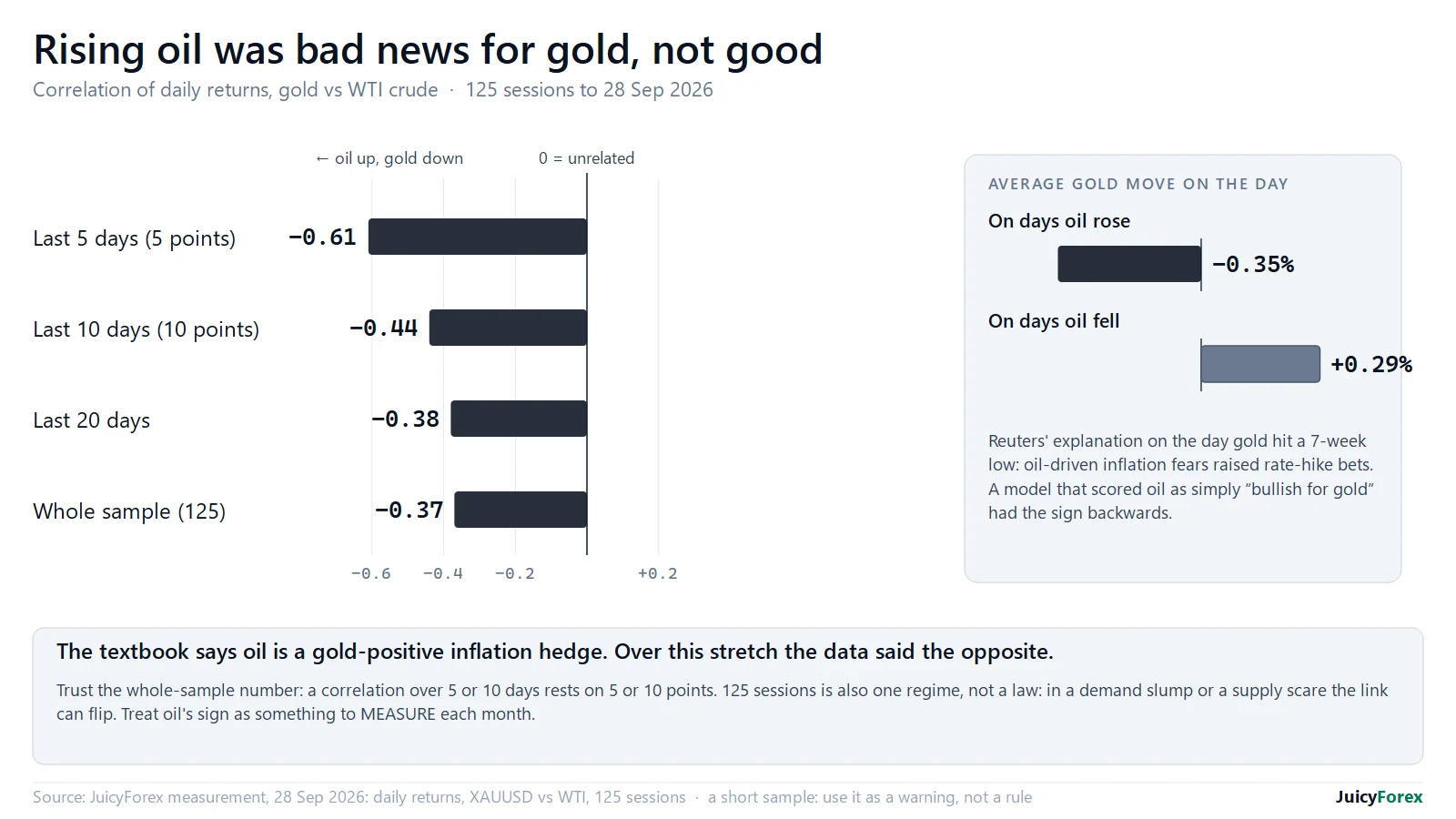
Most geopolitical events reach markets through one of two routes. The first is the oil risk premium: tension near key producing regions or shipping routes raises the fear of supply disruption, and crude oil rises on that fear — often before any barrels are actually lost.
The second is safe-haven flows: fear and uncertainty push money into perceived safe assets — gold, the US dollar, the Japanese yen and the Swiss franc. These two channels explain the large majority of geopolitically-driven moves in the markets a forex or gold trader watches.
Why the moves often fade
Here is the part the headlines rarely mention: geopolitical spikes frequently mean-revert. If a feared oil-supply disruption never materialises, the risk premium bleeds back out; if a scare passes, the safe-haven bid unwinds.
Markets price the probability of credible impact, not the drama of the headline. A dramatic story with no real effect on supply or the economy can produce a sharp spike that reverses within days. That is why chasing a geopolitical move is dangerous.
Headline fatigue
Related to this is headline fatigue. Repeated, non-escalating tensions produce ever-smaller market reactions over time. An event that once moved markets sharply may, after enough repetition, barely register — because the market has learned to treat it as noise unless something genuinely new happens.
This is a good demonstration that markets react to credible change, not to volume of coverage.
How we approach geopolitics
We cover geopolitics strictly as a market driver, and we stay rigorously neutral. We explain how events transmit to oil and gold — never who is right or wrong, and never with a prediction about what will happen. Conflicts carry real human cost, which we treat with respect and never sensationalise.
The goal is understanding, not forecasting. The next guides go deeper on the oil risk premium, safe-haven flows, and the de-dollarisation narrative. This is education, not advice.
Frequently Asked Questions
How does geopolitics move markets?
Mainly through two channels: an oil risk premium, where fear of supply disruption lifts crude, and safe-haven flows, where fear pushes money into gold, the dollar, the yen and the franc. Both often fade if no real disruption follows.
Why do geopolitical spikes often reverse?
Because markets price the probability of credible impact, not the drama of a headline. If a feared disruption never materialises, the risk premium or safe-haven bid unwinds, and the spike can reverse within days.
What is headline fatigue?
The tendency for repeated, non-escalating tensions to produce ever-smaller market reactions over time. Markets learn to treat familiar risks as noise unless something genuinely new occurs.
Which assets benefit from geopolitical fear?
Traditional safe havens: gold, the US dollar, the Japanese yen and the Swiss franc. Oil also tends to rise when the event threatens supply. But these are volatility events, not guaranteed one-way trades.
Does JuicyForex take political sides on geopolitics?
No. We cover geopolitics strictly as a market driver, rigorously neutral, explaining how events transmit to oil and gold. We take no political sides, make no predictions, and never sensationalise conflict.
70–80% of retail investor accounts lose money trading CFDs. This page is education, not advice. All trade examples are constructed composites.