

The economic calendar lists scheduled data releases, but only a handful truly move markets: inflation (CPI), the jobs report (NFP), central-bank meetings, and GDP. Markets react to the surprise versus consensus, not the level, and the biggest releases produce sharp two-way whipsaws. Knowing what is scheduled — and respecting the volatility around it — is basic trader literacy.
Tiering the data by impact
Not all data is equal. It helps to think in tiers. Tier 1 — inflation (CPI), the jobs report, central-bank decisions — reliably moves markets hard. Tier 2 — GDP, retail sales, PMIs — matters but usually less. Lower tiers are mostly noise unless they surprise badly.
Focus your attention on Tier 1. Those are the days that produce the moves — and the risk.
The key releases
CPI is the headline inflation report and one of the biggest scheduled events for gold and the dollar. Non-farm payrolls, out the first Friday of each month, is the US jobs report and equally market-moving — and wages and revisions can matter more than the headline count. Central-bank meetings set rates and guidance. GDP is the broad growth read, though it lags faster indicators.
Leading indicators like PMIs give an earlier read on growth, which is why the market watches them despite their lower headline impact.
The surprise rule
The single most important thing about the calendar: markets trade the surprise, not the level. Every release has a consensus forecast, and the reaction is to the beat or miss versus that forecast. A strong number that was already expected may do nothing; a modest miss can move markets sharply.
So a release is only "good" or "bad" relative to expectations — never in isolation.
Reading a release safely
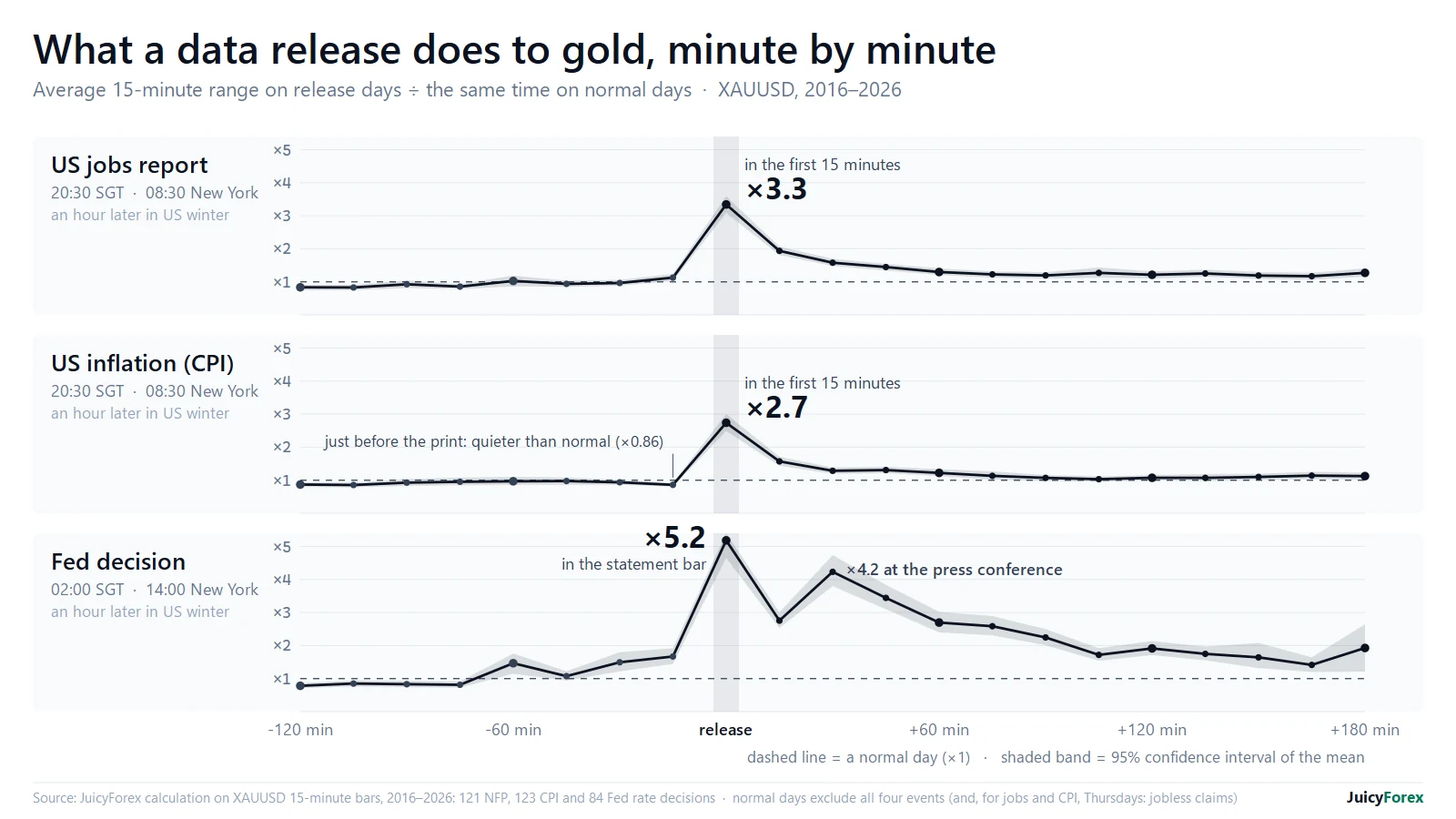
Tier-1 releases produce some of the sharpest, most treacherous moves there are. Price often spikes on the headline and reverses within minutes as the details sink in. Chasing that first candle is how many traders get caught.
The discipline is the same everywhere: around scheduled data, expect two-way volatility, size smaller, use structural stops, and remember spreads widen in the fast conditions. Knowing the calendar is about managing risk, not predicting the print. Education, not advice.
Frequently Asked Questions
What is an economic calendar?
A schedule of upcoming economic data releases and central-bank events, usually tiered by expected market impact. Traders use it to know what is coming and when, so they are not caught off guard by volatility.
Which economic releases move markets most?
Tier-1 events: inflation (CPI), the jobs report (NFP), central-bank decisions, and GDP. These reliably move currencies, gold and yields. Lower-tier data matters less unless it surprises badly.
Why does the market react to the forecast, not the number?
Because expectations are already priced in. Markets trade the surprise — the beat or miss versus consensus. A strong number that was expected may do nothing, while a modest miss can move markets sharply.
Why does price whipsaw after data?
Because the first reaction is to the headline, and traders then reassess as the details and revisions sink in — often reversing the initial move within minutes. The fast, thin conditions make it treacherous.
How should I handle news days?
This is education, not advice. Expect two-way volatility and wider spreads, use smaller size and structural stops, and do not chase the first spike. Knowing the calendar is about managing risk, not predicting the release.
70–80% of retail investor accounts lose money trading CFDs. This page is education, not advice. All trade examples are constructed composites.