

Understand the drivers. Do not trade the narrative. Knowing who leads the Fed and what they believe helps you read why markets move. It does not tell you the next candle, and betting an account on a Fed-leadership story is a classic trap. Respect event volatility, set your risk with a stop and position size, and treat this as context, not a signal.
Do not trade the narrative
A compelling story feels like a reason to take a big position. "A hawkish new Chair is coming, so sell gold" is one example. It is not a reason. Macro narratives are seductive and frequently wrong. The appointment may not happen. The new Chair inherits a committee and an economy that constrain them. Markets often move against the obvious story because it is already priced in.
Understanding Fed leadership makes you a better reader of markets. It does not make you a forecaster, and it is not a licence to size up.
Read the drivers, not the personalities
Fed leadership shapes the drivers you already know how to read: real yields, the dollar and the liquidity backdrop. So watch those drivers respond to Fed events, rather than trading the personalities directly.
When a Fed development lands, ask the usual questions.
- What did real yields do?
- What did the dollar do?
- Is there a confidence or safe-haven angle?
The Chair is upstream. The drivers are what you actually read. See how the Fed moves gold.
Respect event volatility
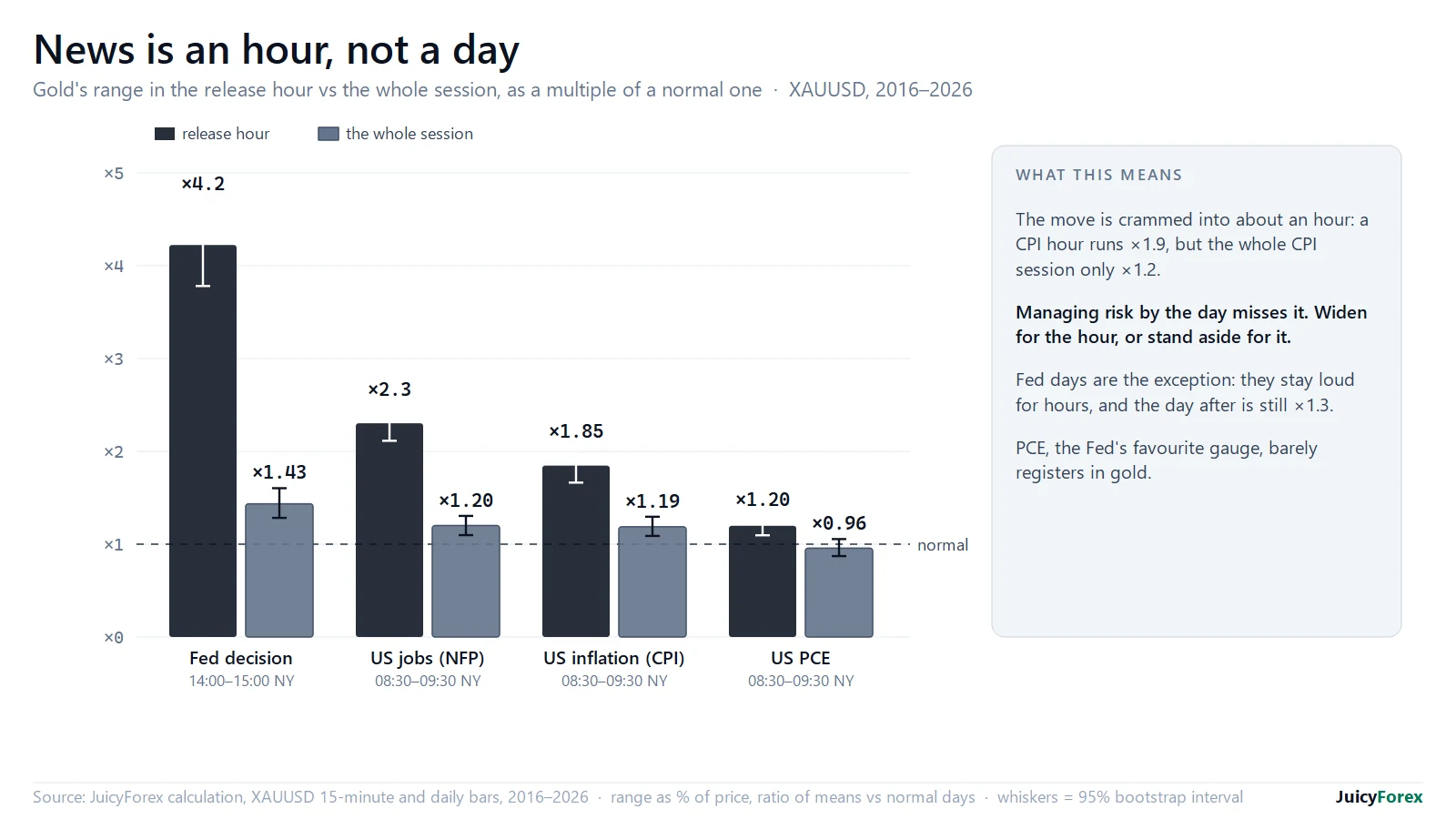
Fed meetings, speeches and leadership uncertainty are among the most volatile moments in markets. Price can spike and reverse violently while the market digests tone and detail. Spreads widen in fast conditions.
Around Fed catalysts:
- Expect two-way volatility.
- Size smaller.
- Use structural stops.
- Do not chase the first move.
A leadership transition is volatility to manage, not an edge to exploit.
Understanding beats predicting
We do not predict who will lead the Fed, what the Fed will do, or where gold will go. That is deliberate and honest. Nobody knows these things, and anyone selling you certainty about them is selling something.
What you can do is understand the machinery well enough to read it, whatever happens. That is a durable edge in comprehension. It is not a prediction. It is the ability to make sense of the move once it comes.
The bottom line
Fed leadership matters. It shapes the drivers behind the dollar, yields and gold. But mattering to the market is not the same as being tradeable as a bet. Use what you know to interpret events, size every position so no single macro surprise can hurt you, and never confuse a good story with an edge.
Risk comes before reward, especially when the macro narrative is loud. This is education, not advice, and makes no price predictions.
Questions
Should I trade based on who becomes Fed Chair?
Be very cautious. The appointment may not happen, a new Chair is constrained, and the obvious story is often priced in. Understanding leadership helps you read markets, not forecast them.
Can anyone predict what the Fed will do?
Not reliably. Treat anyone selling certainty about Fed policy with suspicion. Build understanding instead, so you can read the move once it happens.
How does Fed leadership affect my trades?
Indirectly, by shaping real yields, the dollar and the liquidity backdrop. Watch those drivers respond to Fed events rather than trading the personalities directly.
70–80% of retail investor accounts lose money trading CFDs. This page is education, not advice. All trade examples are constructed composites.