

Oil carries a geopolitical risk premium because so much of it flows through a few narrow chokepoints, above all the Strait of Hormuz. A credible threat to supply can spike crude fast, on the fear of lost barrels rather than actual losses. The premium also reflects OPEC+ supply decisions. These spikes often mean-revert if transit and supply continue unaffected.
The chokepoints
Oil's risk premium exists largely because global supply is funnelled through a handful of narrow maritime chokepoints. The most important by far is the Strait of Hormuz, through which a very large share of the world's seaborne crude passes. There is no easy alternative route for much of it. Any credible threat to shipping there can lift oil sharply on supply-disruption fear.
The Red Sea and the Suez Canal are a different kind of chokepoint. They matter more for goods trade and freight costs than for crude supply. Disruption there still feeds into shipping costs and, indirectly, inflation.
OPEC+ and the supply side
Beyond acute events, the risk premium reflects the ongoing supply picture, coordinated by OPEC+. This is the group of major producers that sets output quotas. Decisions to cut or raise production move the baseline against which geopolitical risk is priced.
As in all markets, oil trades the surprise. An OPEC decision matters relative to what was expected. An announced cut only bites if members actually deliver it. Watch what members deliver, not only what they announce.
What this means for a trader
Oil is highly volatile and gaps violently on geopolitical news. Chasing a spike, or buying into the fear, is exactly how traders get caught when the premium reverses. The lesson is the same one that liquidity and news events teach. Treat a spike as volatility to manage, not a trend to chase.
- Respect the volatility.
- Size smaller.
- Use structural stops.
- Do not confuse a dramatic headline with a durable trend.
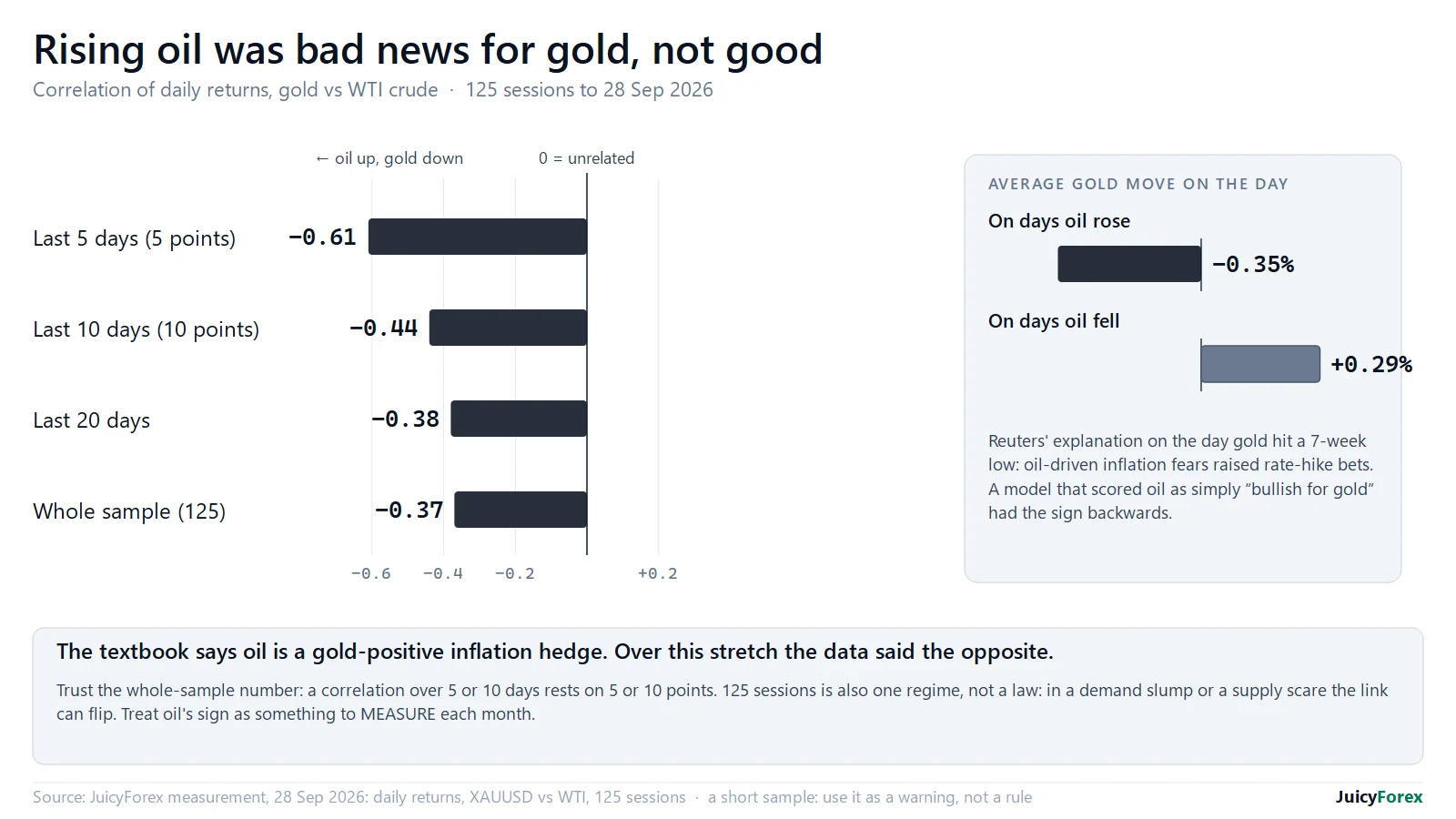
Oil-driven inflation can also loop back to the Fed and, through real yields, to gold. This is education, not advice.
Questions
Why does oil spike then fall after geopolitical events?
The market prices the probability of a supply disruption. If the feared disruption never happens and transit continues, the premium bleeds back out and the spike reverses, often within days.
How does OPEC+ affect the oil risk premium?
OPEC+ sets production quotas, which move the baseline supply picture against which geopolitical risk is priced. Oil trades the surprise versus expectations, and announced cuts only matter if members deliver them.
Should I trade oil on geopolitical news?
This is education, not advice. Oil gaps on news and spikes often reverse. If you trade oil, use smaller size and structural stops.
70–80% of retail investor accounts lose money trading CFDs. This page is education, not advice. All trade examples are constructed composites.